
I’m thinking about self-harming
Self-harm is when you hurt yourself as a way of dealing with very difficult feelings, painful memories or overwhelming situations and experiences.
These emotions can gradually build up inside you, and you may not know who to turn to for help. Self-harm may be a way of releasing these pent-up feelings and finding a way to cope with your problems.
We know that self-harm is linked to anxiety and depression. These mental health conditions can affect people of any age.
This page is to help anyone who has experienced self-harm, you are not alone
If you are thinking about self-harming, please get in touch with Mindline Somerset locally on 01823 276892 or freephone 0800 138 1692 or email support@openmentalhealth.org.uk.
If you are in crisis and need immediate support please contact 999.
Types of self-harm:
There are lots of different forms of self-harming. Some people use the same one all the time, other people hurt themselves in different ways at different times. Some ways in which people can hurt themselves can include:
- Cutting yourself
- Overdose
- Burning your skin
- Alcohol/drug misuse
- Hitting yourself or head banging
- Overeating or under eating
- Having unsafe sex
- Putting yourself in risky situations
- Inserting objects into your body
- Neglecting your health and not looking after yourself
Who self-harms and why?
Anyone at any time can self-harm. You are not alone.
Any difficult experience can cause someone to self-harm. Some of the reasons why you may self harm may include:
- Pressures at school or work/loss of a job
- Bullying
- Money worries
- Sexual, physical or emotional abuse
- Coming to terms with your sexuality
- Relationship problems with partners, friends and family
- Bereavement
- Low self esteem
- Health problems
- An increase in stress
- Depression, anxiety, anger or numbness
There are no fixed rules about why people self-harm. It can be very different for everyone. For some people, self-harm is linked to specific experiences and is a way of dealing with something that’s either happening in the moment or which happened in the past. For others, the reasons are less clear and can be harder to make sense of. Whatever the reason, self-harm is often used as a way of trying to obtain relief from emotional distress or expressing feelings that are difficult to communicate.
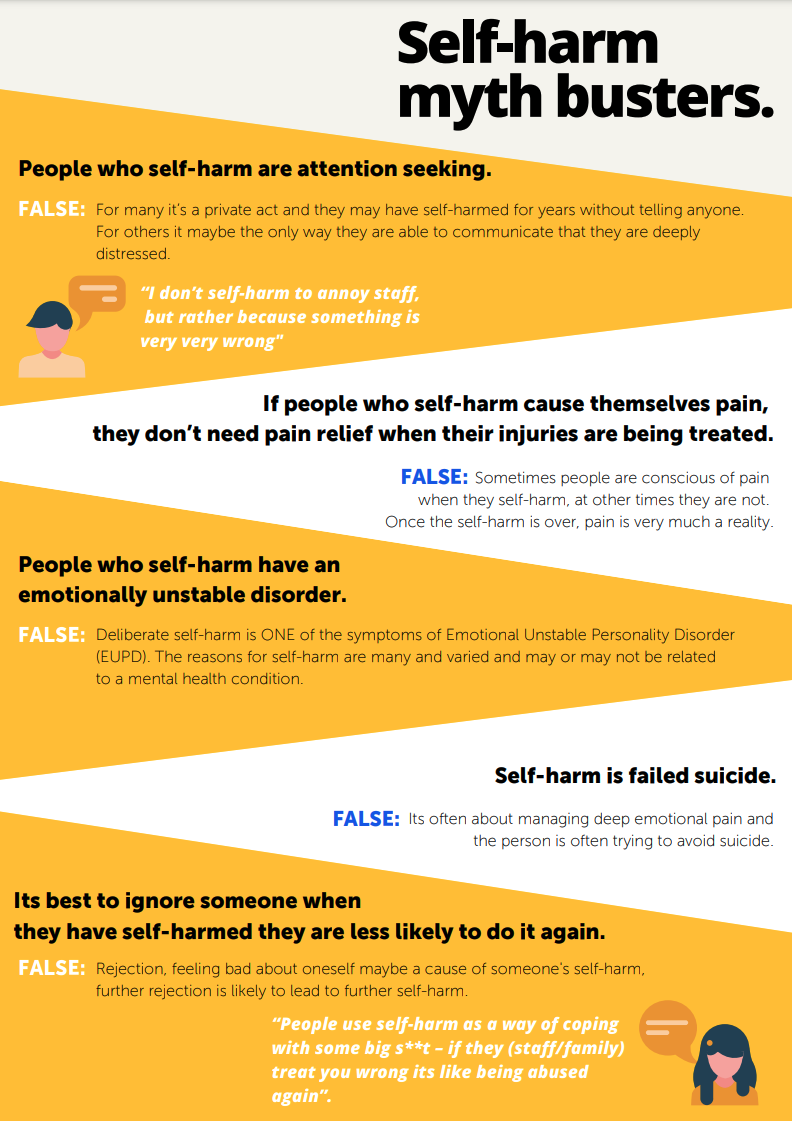
There can often be preconceptions around why people self-help. The below myth-busters address some of these and act as a reminder to be non-judgmental when thinking about why a person might self-harm:
Self-harm is different for everyone.
How to get help:
If you seek help there are no judgements. Self-harm can be hard to talk about because it can be linked to emotions we don’t know how to voice. But it doesn’t have to be that way.
There are a number of helpful resources online that you can look at to help you understand what is happening to you, or someone you care about, and to make sure you can get the help that you need.
There are lots of other websites that you might find useful:
- Mind has lots of really useful information about self-harm and stories from others how experience self-harm. Visit their website
- The National Self Harm network website has lots of resources to help individuals who self-harm and also family/carers of those who self-harm. Visit their website
- LifeSIGNS is a user-led small charity creating understanding about self-harming. Visit their website
- The NHS Inform website provides information on learning how to manage difficult feelings. Visit their website
- Mood Panda’s online diary can help you to identify triggers that lead to self-harm. Visit their website
- Mind’s online community Side By Side provides a place to seek support from peers. Visit their website
- Recover Your Life is an online self-harm support community where you can talk to peers with similar experiences. Visit their website
- CALM run a free & confidential helpline and webchat – 7 hours a day, 7 days a week for anyone who needs to talk about life’s problems. Visit their website
- The National Self Harm Network (NSHN) has produced a useful guide on how distractions can help relieve the urge to self-harm.
If you are a young person (under 18) looking for support the below websites provide useful resources and support that you may find helpful:
- Young Somerset – wellbeing support including virtual hubs and counselling. Visit their website
- Papyrus is a national charity dedicated to the prevention of young suicide. They provide confidential support and advice to young people struggling with thoughts of suicide, and anyone worried about a young person through their helpline, HOPELINEUK. Visit their website
- Young Minds Crisis Messenger text service provides free, 24/7 crisis support across the UK. If you are experiencing a mental health crisis and need support, you can text YM to 85258. Visit their website
- Kooth is a confidential online mental health service where young people and adults can receive counselling, advice and support for their emotional well-being. Visit their website
Don’t ask me why, ask me what I need.
Open Mental Health resources:
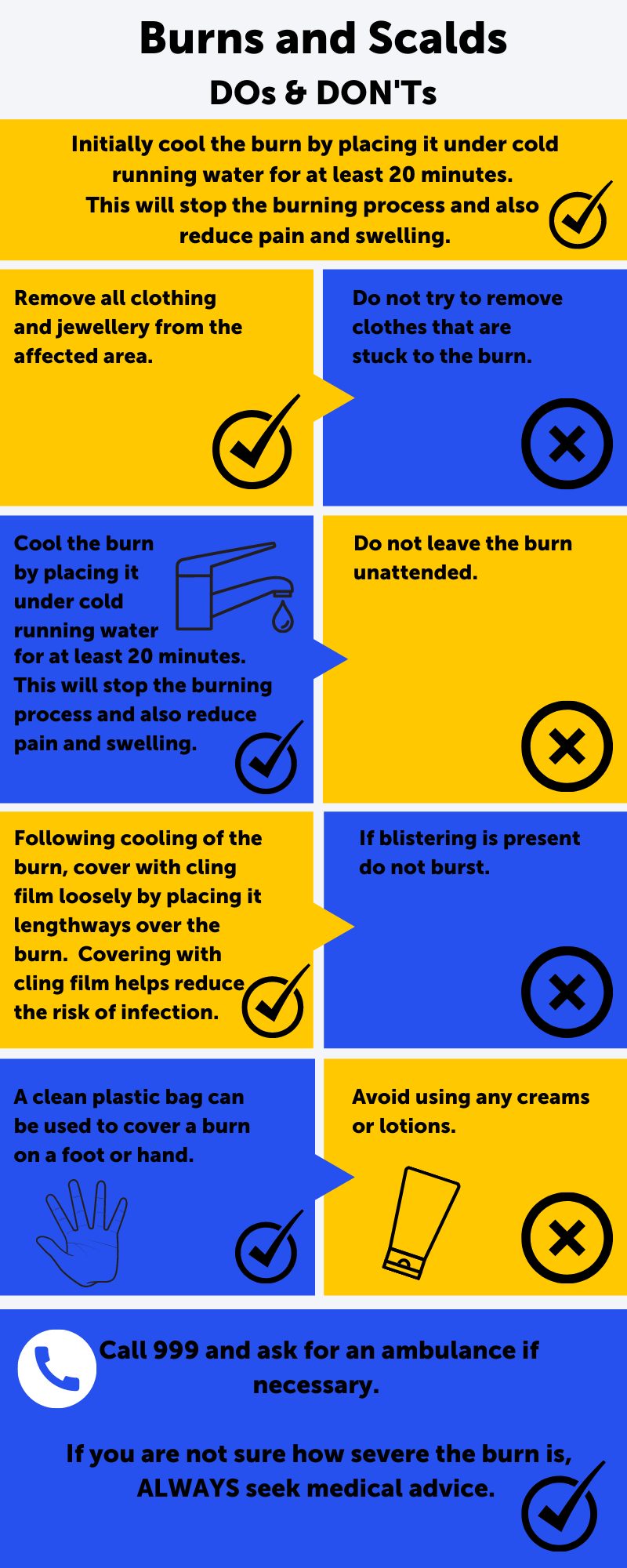
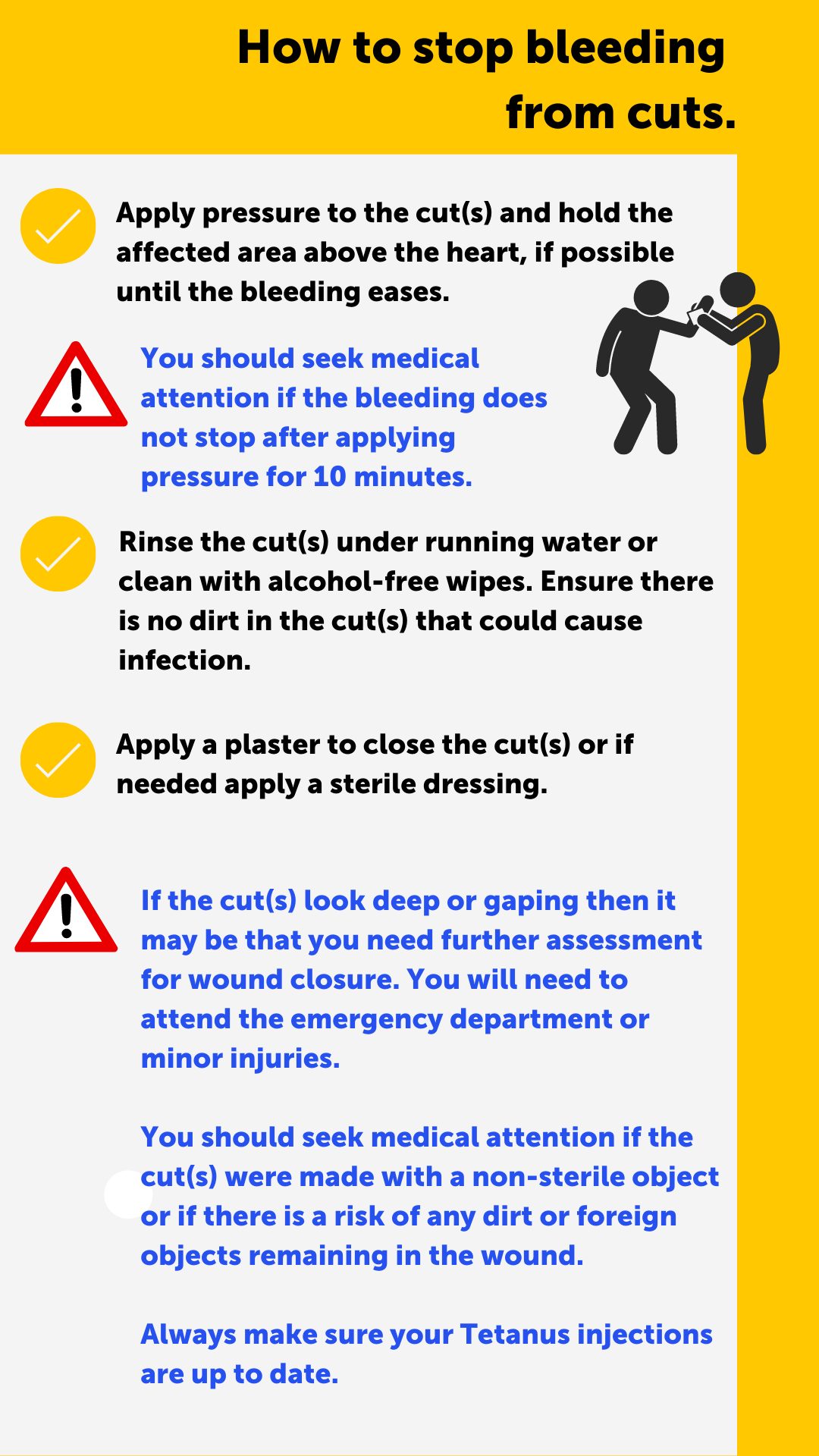
The resources below provide advice on what to do if you have hurt yourself in some way.
If you are unsure how severe your injury is always seek immediate support and call 999.

Caring for someone who self-harms:
Finding out that someone you care about self-harms can be difficult.
Whether someone tells you directly, or you suspect that someone is harming themselves, it can be really hard to know what to say and how to provide the right support.
How you can help
There are lots of things you can do to support someone who self-harms. Below are a few tips that can help:
- Try to be non-judgemental.
- Let the person know that you are there for them.
- Try to have empathy and understanding about what they are doing.
- Let them be in control of their decisions.
- Offer to help them find support (you can contact Mindline Somerset for guidance)
More information about how to help someone who self-harms can be found on the Mind website here.
If you are caring for someone who self-harms, please know you are not alone. Read the voice of a carer letter and listen to Cathy’s story below.
Read voice of a carer
As a parent of a child and young adult, and more than likely an adult that self-harms, I can still remember the first time realising what she was doing. I was terrified (bearing in mind this is about twenty years ago now) I didn’t know what to say, or if to say anything, or how to help her. She was under CAMHS and was selectively mute.
I learnt over many years to try and be very practical about it, to not get emotional in any sense but to be supportive and try and encourage her to tell me. That is a big trust issue and it’s easy to blow it by asking too many questions or becoming upset or angry.
I soon learnt that there was no way to stop her, apart from removing all the obvious things from around the house, but she still managed to find things.
In her case the self-harm started as scratches and very shallow cuts, but over time this became not enough. During the early days I tried everything I could think of, I tried to get angry, I tried to be kind and understanding. But in that lies guilt – as a Mother what am I doing? Am I actively encouraging her to self-harm – facilitating her abuse of her own body?
This was when my daughter was early teens, so communication was also challenging naturally, but she was very secretive about it, and a few cuts ended up infected, so we both learnt to talk about a very taboo subject. I bought dressings and antiseptic and left them in the bathroom so she could access them as and when she needed too. She promised me that as soon as one got infected even slightly she would say.
I did not want to live like this, I did not want to be a part of what she was doing to herself, but in a way we both had to face it head on. She wouldn’t stop, therefore I HAD to find a way of helping her to initially look after her wounds, and then a day or so after the self harm I would try and talk with her about other ways…
I think she regrets it now she has her own children, I know she did when she was pregnant as lots of professionals saw her DSH. If I could say something I wish there were people brave enough who have come through self harming to tell young people that these scars are lifelong – that sounds really patronising but I know many, many adults now that are not proud of their scars and have to hide themselves with long sleeves etc.
Short pieces of advice.
Be calm, don’t shout at them or shake your head when you find out – that initial disclosure or discovering the DSH can often be the template for how they move forwards in the future and whether they allow you to help or not.
Try to listen without panicking.
Become practical around them when it’s needed. Keep your emotional responses to one side or will add to their burden of guilt. (You can cry afterwards or beat a pillow). This is not your fault – you haven’t made them self harm.
Also be very careful of the emotional fear you will have that if you and that person have a falling out they will self harm. If you are a parent this is an incredibly difficult balancing act!
Be kind to yourself – this is tough!
Voice of a Carer
You’re not alone, self-harm can happen to anyone.
If you are thinking about self-harming, please get in touch with Mindline Somerset locally on 01823 276892 or freephone 0800 138 1692 or email support@openmentalhealth.org.uk.